
Saturday, 6 August 2022

Sendit, Yolo, NGL: anonymous social apps are taking over once more, but they aren’t without risks

Shutterstock
Alexia Maddox, RMIT University

Have you ever told a stranger a secret about yourself online? Did you feel a certain kind of freedom doing so, specifically because the context was removed from your everyday life? Personal disclosure and anonymity have long been a potent mix laced through our online interactions.

We’ve recently seen this through the resurgence of anonymous question apps targeting young people, including Sendit and NGL (which stands for “not gonna lie”). The latter has been installed 15 million times globally, according to recent reports.

These apps can be linked to users’ Instagram and Snapchat accounts, allowing them to post questions and receive anonymous answers from followers.

Although they’re trending at the moment, it’s not the first time we’ve seen them. Early examples include ASKfm, launched in 2010, and Spring.me, launched in 2009 (as “Fromspring”).

These platforms have a troublesome history. As a sociologist of technology, I’ve studied human-technology encounters in contentious environments. Here’s my take on why anonymous question apps have once again taken the internet by storm, and what their impact might be.
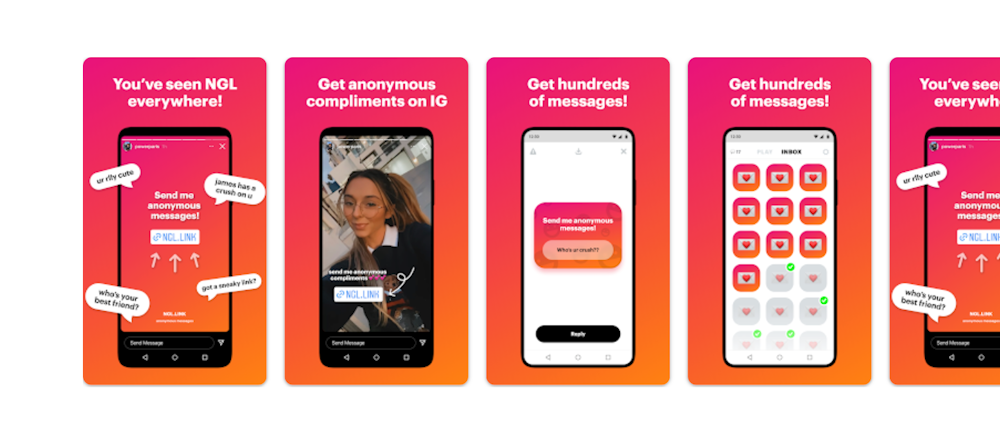
A series of screens advertising various features of the 'NGL' app.
The app NGL is targeted at ‘teens’ on the Google app store. Screenshot/Google Play Store

Why are they so popular?

We know teens are drawn to social platforms. These networks connect them with their peers, support their journeys towards forming identity, and provide them space for experimentation, creativity and bonding.

We also know they manage online disclosures of their identity and personal life through a technique sociologists call “audience segregation”, or “code switching”. This means they’re likely to present themselves differently online to their parents than they are to their peers.

Digital cultures have long used online anonymity to separate real-world identities from online personas, both for privacy and in response to online surveillance. And research has shown online anonymity enhances self-disclosure and honesty.

For young people, having online spaces to express themselves away from the adult gaze is important. Anonymous question apps provide this space. They promise to offer the very things young people seek: opportunities for self-expression and authentic encounters.

Risky by design

We now have a generation of kids growing up with the internet. On one hand, young people are hailed as pioneers of the digital age – and on they other, we fear for them as its innocent victims.

A recent TechCrunch article chronicled the rapid uptake of anonymous question apps by young users, and raised concerns about transparency and safety.

NGL exploded in popularity this year, but hasn’t solved the issue of hate speech and bullying. Anonymous chat app YikYak was shut down in 2017 after becoming littered with hateful speech – but has since returned.
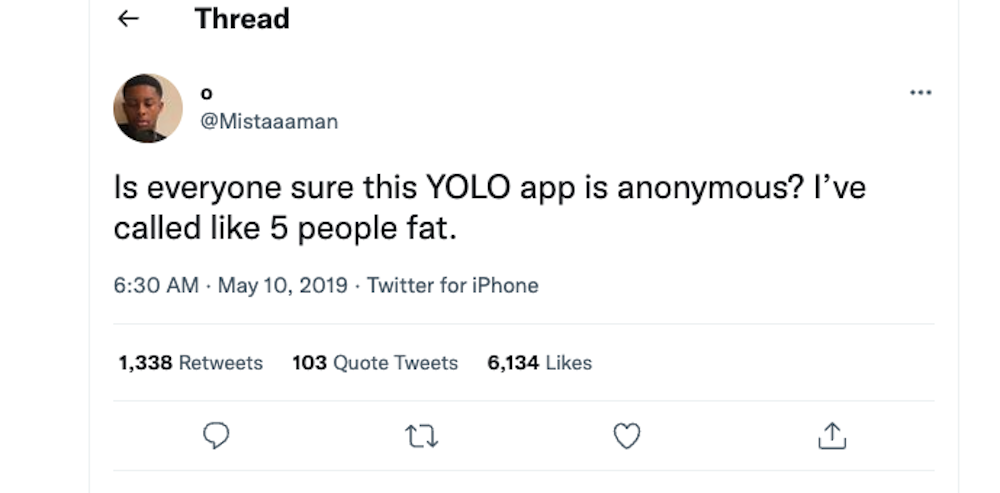
A screenshot of a Tweet from @Mistaaaman
Anonymous question apps are just one example of anonymous online spaces. Screenshot/Twitter

These apps are designed to hook users in. They leverage certain platform principles to provide a highly engaging experience, such as interactivity and gamification (wherein a form of “play” is introduced into non-gaming platforms).

Also, given their experimental nature, they’re a good example of how social media platforms have historically been developed with a “move fast and break things” attitude. This approach, first articulated by Meta CEO Mark Zuckerberg, has arguably reached its use-by date.

Breaking things in real life is not without consequence. Similarly, breaking away from important safeguards online is not without social consequence. Rapidly developed social apps can have harmful consequences for young people, including cyberbullying, cyber dating abuse, image-based abuse and even online grooming.

In May 2021, Snapchat suspended integrated anonymous messaging apps Yolo and LMK, after being sued by the distraught parents of teens who committed suicide after being bullied through the apps.

Yolo’s developers overestimated the capacity of their automated content moderation to identify harmful messages.

In the wake of these suspensions, Sendit soared through the app store charts as Snapchat users sought a replacement.

Snapchat then banned anonymous messaging from third-party apps in March this year, in a bid to limit bullying and harassment. Yet it appears Sendit can still be linked to Snapchat as a third-party app, so the implementation conditions are variable.

Are kids being manipulated by chatbots?

It also seems these apps may feature automated chatbots parading as anonymous responders to prompt interactions – or at least that’s what staff at Tech Crunch found.

Although chatbots can be harmless (or even helpful), problems arise if users can’t tell whether they’re interacting with a bot or a person. At the very least it’s likely the apps are not effectively screening bots out of conversations.

Users can’t do much either. If responses are anonymous (and don’t even have a profile or post history linked to them), there’s no way to know if they’re communicating with a real person or not.

It’s difficult to confirm whether bots are widespread on anonymous question apps, but we’ve seen them cause huge problems on other platforms – opening avenues for deception and exploitation.

For example, in the case of Ashley Madison, a dating and hook-up platform that was hacked in 2015, bots were used to chat with human users to keep them engaged. These bots used fake profiles created by Ashley Madison employees.

What can we do?

Despite all of the above, some research has found many of the risks teens experience online pose only brief negative effects, if any. This suggests we may be overemphasising the risks young people face online.

At the same time, implementing parental controls to mitigate online risk is often in tension with young people’s digital rights.

So the way forward isn’t simple. And just banning anonymous question apps isn’t the solution.

Rather than avoid anonymous online spaces, we’ll need to trudge through them together – all the while demanding as much accountability and transparency from tech companies as we can.

For parents, there are some useful resources on how to help children and teens navigate tricky online environments in a sensible way.

Alexia Maddox, Research Fellow, Blockchain Innovation Hub, RMIT, RMIT University

This article is republished from The Conversation under a Creative Commons license. Read the original article.


Rather than threaten jobs, artificial intelligence should collaborate with human writers

Professional writers may be threatened by artificial intelligence’s ability to generate text. (Shutterstock)
Dongwook Yoon, University of British Columbia

In Sept. 2020, The Guardian published an opinion piece written by a program. The artificial intelligence, called GPT-3, is a large language model developed by OpenAI, and it posed a bold question in the headline of its machine-generated text: “A robot wrote this entire article. Are you scared yet, human?

Indeed, it is a scary time to be a professional writer. Earlier in 2020, Microsoft laid off journalists to replace them with a writing AI. And as AI language models get increasingly better, researchers are claiming that soon, AI-generated text will be indistinguishable from that written by a person.

Our research team at the University of British Columbia investigated what the rise of AI means to human writers. Specifically, we tried to understand what human writers expect from AI, and where the boundaries lie when it comes to writing work.

We interviewed seven hobbyists and 13 professional writers, using a design fiction approach. We first showed the writers different speculative designs of futuristic AI writers. We then asked them to reflect on how co-writing with an AI would transform their practice and perception of writing.

We found that writers wanted AIs to respect the personal values they attribute to writing. These personal values being: emotional values and productivity.

Emotions and productivity

Hobbyists in our study said they find joy in the writing process, referring to the act of writing as a “labour of love.” When considering scenarios where using AI would make them more productive, hobbyists weren’t interested in using the advanced writing technology if it displaced what it means to be a writer.

The writers attributed three different kinds of emotional values to writing. Some writers wanted to claim ownership over the words they wrote and were concerned that co-writing with an AI meant that the text wouldn’t be considered entirely their own. Other writers attributed a sense of integrity to the act of writing, and said using AI would be “like cheating.” Others just enjoyed the process of turning their ideas into words.

By contrast, for professional writers, writing was means of living. If it could make them more prolific, they were open to using AI writers and assigning parts of their job to the robot writers. The professional writers envisioned themselves using AI as a ghostwriter who could realize their ideas into written pieces. To some extent, professional writers were willing to compromise their emotional values in exchange for productivity.

a human hand and a robot hand rest on a keyboard
Professional writers were more open to using AI to help them write if it meant being able to increase their productivity, and therefore their income. (Shutterstock)

Some writers trusted that AI would do a good job in simple writing tasks like making stylistic improvements, rephrasing and proofreading. But they didn’t have much faith in AI’s capacity for creative writing tasks, such as planning a narrative flow and setting up the backgrounds of key characters in the story.

When presented with other speculative scenarios, writers would agree to outsource writing tasks only when their trust in AI supersedes their own self-confidence.

A good ghostwriter

Our study implies an ideal AI writing tool should behave like a human collaborator and that such a tool needs to be aware of the boundaries of human writers and respond by adjusting the level of intervention and writing style accordingly.

Writing with AI can leave writers with energy and time for the creative side of the writing process. Ideally, our entrepreneurial drive would not completely displace humans from our creative endeavours.

Dongwook Yoon, Assistant Professor, Computer Science, University of British Columbia

This article is republished from The Conversation under a Creative Commons license. Read the original article.

‘COVID-419’: how cybercriminals in Nigeria exploited schemes to help people in need

Cybercriminals exploited COVID-19 induced interventions in Nigeria. Issouf Sanogo/AFP via Getty Images
Oludayo Tade, University of Ibadan

The COVID-19 pandemic, with its lockdown and social isolation, has added to the vulnerability of many Nigerians in several ways. Aside from health risks and disruption to livelihoods, the move from physical to virtual relationships heightened the exposure of people to cybercriminals.

The pandemic has changed the landscape of cybercrime in the country. The government’s social and welfare interventions, to cushion the impact of the pandemic, presented an opportunity for fraudsters to take advantage of vulnerable people.

These palliative interventions included food distribution, cash transfers and loan repayment relief.

In addition, with social distancing and restrictions on movement, people have been doing more online. This exposed them more to cybercriminals.

I undertook a study to examine how COVID-19-induced interventions in Nigeria had been exploited by criminals. My research explored which government policies had created opportunities for fraud, what fraud strategies were used, and how this victimisation could be prevented.

My data came from the Economic and Financial Crimes Commission, the Nigerian Police and the Central Bank of Nigeria. I also received examples of fraud schemes from a professional WhatsApp group and from students of criminology.

I found that lack of clearly defined parameters and beneficiaries of Nigeria’s palliative schemes created loopholes for cybercriminals. I’ve called their strategies “COVID-419” – a term combining the names of the coronavirus disease and section 419 of the Nigerian Criminal Code Act, which deals with fraud.

It’s important to understand how cybercriminals adapt to changing circumstances and what strategies they use, so that more harm can be prevented.

Context of COVID-419 cybercrimes

The social context of the COVID-19 pandemic in Nigeria helps explain how it presents opportunities to fraudsters. A large percentage – 65% – of the population works in the informal sector. It contributes about 50% of the country’s gross domestic product.

People working in the informal sector are heavily dependent on human interaction. They also rely heavily on public transport.

Lockdown measures had a devastating impact. As a result citizens appealed for help. In response, government formulated policies on palliatives to be given to the vulnerable. A Presidential Task Force on COVID-19 was also set up to coordinate distribution of the palliatives.

They included:

  • distribution of 70,000 tonnes of rice to poor and vulnerable households across the country

  • a three-month repayment moratorium for all Government Enterprise and Empowerment Programme loans such as TraderMoni, MarketMoni and FarmerMoni.

  • a three-month moratorium for all federal government funded loans issued by the Bank of Industry, Bank of Agriculture and the Nigeria Export Import Bank

  • cash transfers and food rations for internally displaced persons.

But the policy had a weak spot: there was no definition of who was poor and who was vulnerable. President Muhammadu Buhari’s broadcast on 29 March 2020 illustrated this.

For the most vulnerable in our society, I have directed that the conditional cash transfers for the next two months be paid immediately. Our internally displaced persons will also receive two months of food rations in the coming weeks.

Many citizens expected and awaited the palliatives. Some may never have got them despite being in need. It is difficult to know how many people actually did benefit. Figures are not easily available and one report said the palliatives were hijacked and distributed among the ruling party loyalists.

All the payments ordered by the president were part of existing government social investment programmes like N-power, Conditional Cash Transfer and Government Enterprise Empowerment Programme.

They had nothing to do with the “new vulnerable” – those whose livelihoods were threatened by COVID-19. But everyone affected by the lockdown expected to benefit from them. They may have believed they qualified for help, yet they weren’t told exactly who would get what and how. This made some people easier targets for scams.

Fraudulent schemes

All the schemes developed by the fraudsters show similarities with the palliatives that government announced. Cybercriminals also developed schemes using the identities of donors that were listed by the Nigerian government on the website of the Presidential Task Force on COVID-19.

Relief fund fraud: The original COVID-19 relief fund was set up to give beneficiaries N20,000 (US$49) monthly. Cybercriminals patterned their fraudulent scheme after this. They designed a website where people were asked questions and were promised a payment of N20,000. The scam message had a fake government seal on the upper left corner, to deceive people into thinking it was a genuine message from the federal government. A prospective victim is congratulated to be eligible for the funds after answering series of questions. The person is required to click a green button beneath the page which has the inscription “SHARE NOW”. The person is advised to only share with seven WhatsApp groups. Then, the person would be asked to send bank details with sensitive information. They subsequently hacked their accounts and cleared the funds there.

Loan fraud: Another scheme appropriated by the cybercriminals was the relief loan disbursement form. On the online form, people were asked to supply their names and account details. This scam was framed to align with the presidential address which announced conditional cash transfers and loans. The form had an imprint of Nigeria’s coat of arms on the left side, and used the national colours to make it look authentic. It followed the same pattern with the relief fund fraud.

Fast food coupon fraud: The president’s announcement that rice and groundnut oil from the Nigerian Customs Service would be released also triggered fraud. These were meant to be distributed to state governments. The states were in turn asked to organise the distribution to vulnerable people. Scammers designed a scheme that appeared to offer a free pizza coupon – an attractive luxury for many people. A voucher bearing the name of a pizza outlet was shared online and potential victims were asked to fill their financial details in order to claim the free pizza. This exposed them to hackers who cleared their bank accounts after critical information had been supplied.

Data scam: With restrictions on movement, a major means of connecting with people was going online. Nigerians asked telephone companies to offer free data to their customers. Some companies gave their subscribers 10 free text messages daily. Cybercriminals designed a scheme called “free 16GB to kill boredom during this lockdown.” Different websites supposedly belonging to telephone companies were created and people were asked to click on them. Doing so and supplying biodata and bank details enabled the fraudsters to have access to their bank accounts.

Preventing victimisation

Nigerian government agencies distanced themselves from the fraudulent schemes. But the way in which social interventions were implemented provided leeway for fraud victimisation.

To prevent this from happening in the future the Nigerian government must communicate effectively with the public – particularly beneficiaries – about its policies. This will help protect them against possible victimisation.

In addition, Nigeria’s security agencies need be involved. They need to act promptly by taking down websites where deliberate falsehoods and misinformation are published.

Oludayo Tade, Communication/Security Consultant, Sociologist/Criminologist/Victimologist and Facilitator, University of Ibadan

This article is republished from The Conversation under a Creative Commons license. Read the original article.

3D printing offers African countries an advantage in manufacturing

3D printing is an excellent match for smaller operators. Shutterstock
Seun Kolade, De Montfort University

Thousands of years ago, the blacksmith led a technological leap in sub-Saharan Africa. West Africa’s Nok culture, for example, switched from using stone tools to iron around 1500BC. Imagine an innovative artisan like this re-emerging in the 21st century equipped with digital technologies.

This is not Wakanda science fiction. It is the story of a real promise that 3D printing holds for an industrial revolution on the African continent.

3D printing, also known as additive manufacturing, is a fabrication process in which a three-dimensional object is built (printed) by adding layer upon layer of materials to a series of shapes. The material can be metal, alloys, plastics or concrete. The market size of 3D printing was valued at US$13.78 billion in 2020, and is expected to grow at an annual rate of 21% to a value of US$62.79 billion in 2028.

Not only is it a different way of physically making objects, 3D printing also changes the picture of who can participate in industry – and succeed.

3D printing is an excellent match for smaller operators because it does not require huge capital investment. It is also the best fit for “newcomers” while established operators are locked in the old manufacturing method. The new technology is a great opportunity for developing countries to leapfrog over developed countries.

In a recent paper, we reviewed the evolution of 3D printing technologies, their disruptive impact on traditional supply chains and the global expansion of the 3D printing market.

We show that conditions in the African context are favourable for technological leapfrogging, and propose that universities, industries and government can work together to support this, giving small and medium enterprises a key role.

We illustrate our argument using South Africa and Kenya as examples.

Technological leapfrogging

Technological leapfrogging is related to technology lock-in.

Lock-in happens when an established technology continues to dominate the market even after the arrival of a new and superior technology. The older technology remains successful not because it’s better but because it got the advantages of an early lead in the market.

In developed countries, where the older technology has taken hold, it’s difficult for new, radical technologies to get a start. Too much has already been invested in the old ways.

But it’s different in developing countries. Less has been invested in older technologies. And almost everyone is starting from the same point; the the cell phone is an example.

For a long time, the African continent has lagged behind the rest of the world in manufacturing. A recent report indicates that while Africa is home to 17% of the world’s population, it accounts for only 2% of global manufacturing value added. 3D printing presents an opportunity to revive this sector through technological leapfrogging.

African countries meet the four key conditions highlighted by scholars for technological leapfrogging:

  • There must be a large difference between the wage costs of the leading nation and potential challengers.

  • The new technology must appear initially unproductive and less profitable relative to the old.

  • Experience in the old technology must be less useful and less transferable to the new technology.

  • The new technology must, in the long run, improve productivity and efficiency.

To take the first condition, the wage cost of an average African country is a small fraction of the wage cost in a developed country. For example, according to the latest estimates, the average annual income in Nigeria is US$2,000, compared with US$64,530 for the United States.

3D printing is initially unproductive because of lower initial rates of adoption. This means a smaller market and limited profit opportunities.

Looking at the third condition, 3D printing is not an incremental improvement on what went before, so experience in the old technology does not count for much.

On the fourth condition, one of the strongest arguments for 3D printing is that it flips the dominant logic of traditional manufacturing: scale economies. Big multinational manufacturing corporations invest heavily in machinery, logistics and other material and human resources for mass production. They make big profits only if they sell enough units. The more they sell, the bigger their profit margins.

3D printing doesn’t need centralised high-volume production and large inventory stocking. Suddenly, it pays to produce fewer units. There is no need for heavy investment in manufacturing plants, because 3D printers come in various smaller sizes and at lower costs. There is now a growing market for budget and do-it-yourself 3D printers that cost less than US$200.

Smaller and more sustainable

All this shifts the advantage in favour of micro, small, and medium scale enterprises.

Firstly, it offers greater reward for creativity and ingenuity. Like the African blacksmith of yore, additive manufacturers can design customised, higher value products in response to specific demands and requirements.

The proximity of 3D printing shops to customers is another advantage as it reduces logistics costs and supply chain challenges.

Sustainability is another benefit: the process produces only what is needed. It can reuse waste material.

Micro and small-scale 3D printing shops can offer work and income opportunities for households.

University, industry and government

Our study proposes a way for the university, industry and government sectors on the African continent to work together to harness the opportunities offered by 3D printing. These domains – producing knowledge, producing goods and regulating economic relations – have tended to be disconnected. Instead, we argue that greater integration can encourage innovation.

We give examples from South Africa and Kenya to illustrate the challenges and opportunities.

In South Africa, universities are leading the drive to provide training and retraining programmes for engineers, technologists and other professionals involved in 3D printing. Much more needs to be done to develop new curricula, research and programmes in additive manufacturing.

Kenyan universities are at an earlier stage, focusing on convening networking and knowledge exchange events.

In the government sector, South Africa has the most detailed policy document of any African country on 3D printing. The country’s 3D printing strategy is being led through the Ministry of Science and Technology, and through agencies such as the Council for Scientific and Industrial Research and Technology Innovation Agency. In the industry sector, South Africa’s Rapid Product Development Association works closely with the government to organise conferences, workshops and community engagement activities.

The results so far

The South African 3D printing industry has had considerable success in recent years, driven by a growing community of enthusiasts and designers.

Small enterprises and startups are making inroads in areas such as 3D printing of cell phone accessories, car accessories, and jewellery. In 2014, South African doctors used 3D-printed titanium bones to perform a jaw-bone transplant surgery, the second in the world. There are also recent applications of 3D printing in housing.

The three spheres need to do more work in research investment, policy interventions and strategic public procurement. And they need to cross boundaries. Universities can commercialise and contribute to policies. Industry can invest in research and influence policies. Governments can play in the market and in knowledge production.

Seun Kolade, Associate professor, De Montfort University

This article is republished from The Conversation under a Creative Commons license. Read the original article.
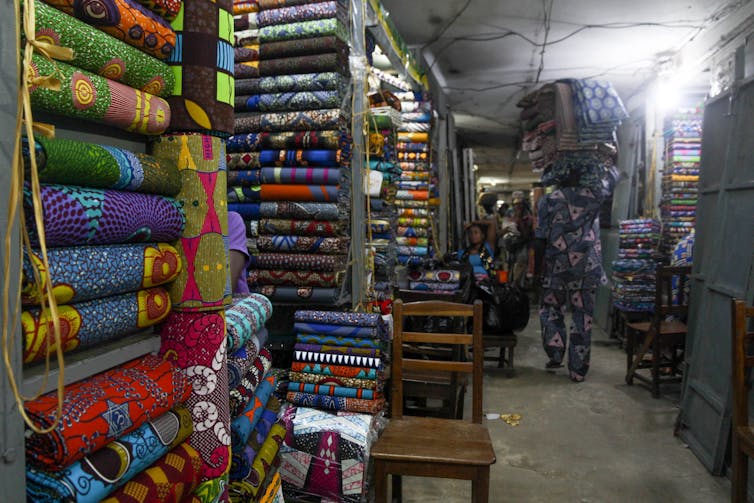
How nanotechnology can revive Nigeria’s textile industry


Yannick Folly/AFP via Getty Images Agbaje Lateef, Ladoke Akintola University of Technology, Ogbomoso

Nigeria’s cotton production has fallen steeply in recent years. It once supported the largest textile industry in Africa. The fall is due to weak demand for cotton and to poor yields resulting from planting low-quality cottonseeds. For these reasons, farmers switched from cotton to other crops.

Nigeria’s cotton output fell from 602,400 tonnes in 2010 to 51,000 tonnes in 2020. In the 1970s and early 1980s, the country’s textile industry had 180 textile mills employing over 450,000 people, supported by about 600,000 cotton farmers. By 2019, there were 25 textile mills and 25,000 workers.

The industry competes in a global textile market that was valued at US$ 993.6 billion in 2021 and is expected to grow at a rate of 4.0% from 2022 to 2030. Once the continent’s leader, Nigeria spends on average US$4 billion a year to import textiles that it could produce itself. Imports put pressure on foreign exchange reserves, jobs and local demand for cotton.

Technical innovation could make the textile sector more competitive – not only by improving cotton production but also by improving textile quality. This can be achieved in Nigeria.

Nowadays, textiles’ properties can be greatly improved through nanotechnology – the use of extremely small materials with special properties. Nanomaterials like graphene and silver nanoparticles make textiles stronger, durable, and resistant to germs, radiation, water and fire.

Adding nanomaterials to textiles produces nanotextiles. These are often “smart” because they respond to the external environment in different ways when combined with electronics. They can be used to harvest and store energy, to release drugs, and as sensors in different applications.

Nanotextiles are increasingly used in defence and healthcare. For hospitals, they are used to produce bandages, curtains, uniforms and bedsheets with the ability to kill pathogens. The market value of nanotextiles was US$5.1 billion in 2019 and could reach US$14.8 billion in 2024.

At the moment, Nigeria is not benefiting from nanotextiles’ economic potential as it produces none. With over 216 million people, the country should be able to support its textile industry. It could also explore trading opportunities in the African Continental Free Trade Agreement to market innovative nanotextiles.

Nanotextiles in Nigeria

Our nanotechnology research group has made the first attempt to produce nanotextiles using cotton and silk in Nigeria. We used silver and silver-titanium oxide nanoparticles produced by locust beans’ wastewater. Locust bean is a multipurpose tree legume found in Nigeria and some other parts of Africa. The seeds, the fruit pulp and the leaves are used to prepare foods and drinks.

The seeds are used to produce a local condiment called “iru” in southwest Nigeria. The processing of iru generates a large quantity of wastewater that is not useful. We used the wastewater to reduce some compounds to produce silver and silver-titanium nanoparticles in the laboratory.

Fabrics were dipped into nanoparticle solutions to make nanotextiles. Thereafter, the nanotextiles were exposed to known bacteria and fungi. The growth of the organisms was monitored to determine the ability of the nanotextiles to kill them.

The nanotextiles prevented growth of several pathogenic bacteria and black mould, making them useful as antimicrobial materials. They were active against germs even after being washed five times with detergent. Textiles without nanoparticles did not prevent the growth of microorganisms.

These studies showed that nanotextiles can kill harmful microorganisms including those that are resistant to drugs. Materials such as air filters, sportswear, nose masks, and healthcare fabrics produced from nanotextiles possess excellent antimicrobial attributes. Nanotextiles can also promote wound healing and offer resistance to radiation, water and fire.

Our studies established the value that nanotechnology can add to textiles through hygiene and disease prevention. Using nanotextiles will promote good health and well-being for sustainable development. They will assist to reduce infections that are caused by germs.

Despite these benefits, nanomaterials in textiles can have some unwanted effects on the environment, health and safety. Some nanomaterials can harm human health causing irritation when they come in contact with skin or inhaled. Also, their release to the environment in large quantities can harm lower organisms and reduce growth of plants. We recommend that the impacts of nanotextiles should be evaluated case by case before use.

Reviving Nigeria’s textile sector

In addition to government’s efforts to revive Nigeria’s textile sector, opportunities in nanotechnology should be explored. Smart nanotextiles that can compete favourably with foreign textiles could be produced locally.

Agriculture can benefit from nanopesticides, nanofungicides and nanofertilizers boosting crop yield. This has been applied to cotton farming. Nanotechnology is also useful to treat effluents of the textile industry in an eco-friendly manner.

Together with higher cotton production, nanotextile products can return Nigeria’s textile industry to glory. This is a unique way to improve Nigeria’s economy by nanotechnology.

Agbaje Lateef, Professor of Microbiology, Ladoke Akintola University of Technology, Ogbomoso

This article is republished from The Conversation under a Creative Commons license. Read the original article.

Citing blogs in academic publications: lessons from urban planning in COVID


Blog art. Shutterstock. www.shutterstock.com
Abeer Elshater, Ain Shams University and Hisham Abusaada, Housing and Building National Research Center

Blogs are a double-edged sword. These online essays can be produced by anyone with access to a computer and the internet. The writers could be well-informed experts with valuable insights to share, or official government agencies. Some bloggers are outstanding academic authors who have published their work in accessible databases, like Scopus, Web of Science and Google Scholar. Others may be poorly informed people simply sharing a biased opinion.

Although readers might be able to comment on a blog, the material doesn’t have the status of peer-reviewed academic research. Checks for quality and reliability aren’t built into blog publishing as they are in academic journals. Previous research has discussed the role of blogging communities as reference sources in scientific manuscripts. The University of Cambridge has warned its researchers not to rely on them.

But some blogs still have appeal as sources of information and ideas for researchers because they often deal with new situations that haven’t yet been covered in the traditional academic literature.

The emergence of COVID was a perfect example of a new and fast-changing situation like this. Vast amounts of information were becoming available online — some of it in blogs that were reliable and useful to the public and to academics, some not.

Researchers and students need to know how to balance their data sources.

Little is known about how to identify reliable blog content in our field of study, urban planning. We decided to explore this, starting by looking at which kinds of blogs were already being cited by academics, and what criteria they were using to guide their choice of blogs.

We found the blogs cited in academic publications were mostly published by governmental and non-governmental organisations. We analysed the ways in which these blogs had influenced the public dialogue over COVID, and demonstrated that they were founded on unique ideas that had not yet undergone peer assessment.

We also came up with three tips that academics can use for citing blogs in their research.

Citing blogs about COVID-19

A lot of academics and researchers of city planning and design turned to blogs during the coronavirus outbreak for information. We conducted a scoping study in 2020, analysing 31 samples from four types of blogging sources cited in 10 publications published in seven journals. We looked at social sciences journals published in 2020 and searched for blogs that were used as references in such articles about COVID-19.

We found that in the year 2020, academics and researchers in urban planning and design used blogs produced by four types of publishers: government agencies, nongovernmental organisations, private groups, and individuals.

Moreover, we found that academics and researchers cited blogs for three reasons:

  • collecting quantitative data resulting from statistical analysis

  • shedding light on qualitative knowledge related to social solutions like social distancing and lockdown

  • confronting the challenges of pandemics through the principles of urban planning.

Criteria for citing blogs

This analysis was part of a wider study of the use of blogs by academics. Based on this work, we have three tips for finding blogs that publish scientific findings on vital topics like COVID-19 and can be cited in scholarly articles.

  1. It is possible for academics and researchers in urban planning and design to cite blogs in their scholarly works. This is done by selecting posts that provide relevant analysis, results and findings done by government agencies and nongovernmental organisations.

  2. For blogs written by individuals or private groups such as Brookings and CityLab, it crucial to keep track of bloggers in scientific databases, like the Web of Science, Scopus or Google Scholar. Several metrics can help to understand bloggers’ standing, including the number of citations, h-index, and normalised citation impact.

  3. Citing blogs can be based on the number of views or reviews, which can indicate the possibility of an open-ended debate about the post. However, it is important to remember that while blog views can seem important, they are not necessarily a reliable metric to cite blogs. Blog views reflect the importance of the topic rather than the reliability of the information provided in the blog.

By following these tips, academics and researchers can use blogs as reliable sources of information. They can be cited in scholarly publications for emerging issues such as COVID-19 in its early stages. These tips can guide academics and researchers when they tackle topics still under research or not covered in scientific studies.

Abeer Elshater, Professor, Ain Shams University and Hisham Abusaada, Professor in Housing and Building National Research Center (HBRC), Cairo, Egypt, Housing and Building National Research Center

This article is republished from The Conversation under a Creative Commons license. Read the original article.

Ride-hailing in Lagos: algorithmic impacts and driver resistance

Ride-hailing in Lagos: algorithmic impacts and driver resistance

A driver checking the Uber App. Simon Maina/AFP via Getty Images Daniel Arubayi, University of Oxford

In July 2014, the ride-hailing app Uber emerged in Lagos, offering the public improved mobility through technology. Uber, at the time, was valued at US$18 billion and had launched in 205 cities. Its competitor, Bolt, arrived in Nigeria in 2016.

These apps enable passengers to request a taxi service immediately. They can see information like the fare range, driver ratings, trip distance and driver’s arrival time. The driver sees the passenger’s location, fare range and passenger rating. The driver gets a short time in which to accept or reject a trip request.

Lagos was an obvious market for a transport solution. The city is Nigeria’s financial, economic and digital hub, with over 15.4 million people and a public transport system under strain. From the rider’s point of view, Uber and Bolt offered the benefit of improved vehicles, cheaper fares, efficiency, traceability and safety.

The benefit for potential drivers was employment.

When Uber came to Nigeria, the unemployment rate was around 4.6%. By the time Bolt arrived in 2016, it had increased to 9.1%. Youth unemployment increased from 8.1% to 12.4% in the same period, and there was a recession. It was easy for these platforms to tempt potential drivers and employees with popular phrases like “be your own boss”. These platforms advertised that drivers made between about US$286 and US$477 a week. The minimum wage was 18,000 Naira (US$43.34) a month at the time and even white-collar workers were poorly paid and sometimes had to wait a long time to be paid.

In 2017, Uber claimed to have 276,000 riders and 7,000 drivers in Nigeria.

Uber and Bolt seemed to perfect the platform idea. The systems created digital identities for drivers and managed them through algorithms. This was supposed to create transparency, accountability, autonomy, flexibility, safety and security. But it also created challenges for drivers.

I researched this for my PhD thesis, exploring the impact of algorithmic management on platform drivers in Lagos and how they resisted these hidden forms of control.

For the advantages of ride-hailing platforms to outweigh the challenges, algorithms must reflect the realities of drivers and nuances of the city where they are used. Traceability and safety on platforms must be improved, too, especially as the business model is adopted by more startups across the transport, delivery and domestic work industries.

Impacts of algorithmic management in Lagos

The design of the Uber and Bolt platforms demands top-notch service from drivers. This is done through performance evaluations (such as ratings, and acceptance and cancellation rates); transparency of payment (dashboard display of earnings); incentives (promotional trips); and sanctions (disciplining bad or unsafe behaviours by blocking or deactivating drivers).

To understand how this worked in practice in Lagos, I interviewed 25 drivers over six months, took 40 platform trips and carried out three focused group discussions with both platform drivers and traditional taxi drivers. I also used online worker groups on Facebook and interviewed passengers, policy representatives and venture capitalists. In total, about 70 people were directly involved in this study.

In this article, I summarise some of the challenges and strategies of resistance that my research revealed.

The first challenge the platforms present is that drivers can be exposed to danger. A ride-hailing driver has to register with a platform by providing personal information such as a valid driver’s licence, certifications such as proof of the vehicle passing inspection, address and guarantors to validate worker details. Passengers provide less personal information: contact numbers, bank card details (optional), email addresses and addresses which are not verified. Drivers are vulnerable to passengers. One driver said:

A good number of drivers have been killed by riders because platforms do not profile them well. They do not often input their correct information in the app; they are collecting cars and killing people.

Even if passengers are blocked from the app following drivers’ complaints, they can re-enter the platform ecosystem with different accounts. In contrast, drivers can be temporarily or permanently deactivated if a passenger complains – even falsely. Drivers are calling for better scrutiny of passengers because they do not feel safe on platforms.

Cars in a traffic jam.
Drivers complain they are sometimes misled into traffic jams. Daniel Arubayi

The second challenge is the inaccuracy of embedded digital maps. In a city like Lagos, a poorly built environment without a proper address system, the app can mislead drivers to traffic jams, bad roads or areas undergoing infrastructural construction. This can delay pick-up or arrival times, lead to conflict with passengers, affect the fare, increase cancellation rates, and reduce ratings.

Passengers complicate this issue by switching pickup locations or providing false locations. This affects drivers’ arrival times and hence their performance record. The algorithms don’t properly account for these realities of driving in Lagos.

Escaping the app

Drivers have found ways to resist the algorithms to make more income. For instance, drivers ask riders to cancel a trip so they (drivers) aren’t penalised by cancelling it themselves. They earn a cancellation fee and then take the passengers on the trip anyway – offline.

Drivers persuade passengers to do this by raising the possibility of traffic jams, dangerous or very distant locations and bad roads. They then suggest that the rider cancel the trip and go offline on a better route at a lower fare.

Sometimes, passengers initiate offline trips, especially if they go to multiple destinations or travel out of the city. It suits the drivers because they are not entirely subject to the algorithm in terms of payment, ratings and directions from embedded maps.

Social media and communication networks such as Facebook, WhatsApp and Telegram are central to drivers’ resistance strategies. These online environments serve as daily commentary on the job and a source of tricks for how to resist algorithms. Drivers can comment on whether a proposed offline fare is reasonable, for example, or share details of a passenger for safety.

One informant told me a story about a female passenger who refused to pay a driver:

When this was posted in the WhatsApp group, about 27 drivers visited the lady, seized her iPhone, and collected the fare, including money for damages.

Build in local realities

Platforms such as Uber and Bolt possess the power to fully digitise the transport industry in Lagos with their technology.

But platform algorithms in isolation cannot solve the challenges drivers experience, mainly when contexts are so different from the global north where the platforms were designed.

Daniel Arubayi, Researcher, University of Oxford

This article is republished from The Conversation under a Creative Commons license. Read the original article.